Unexpected baby!

Baby cow, that is.

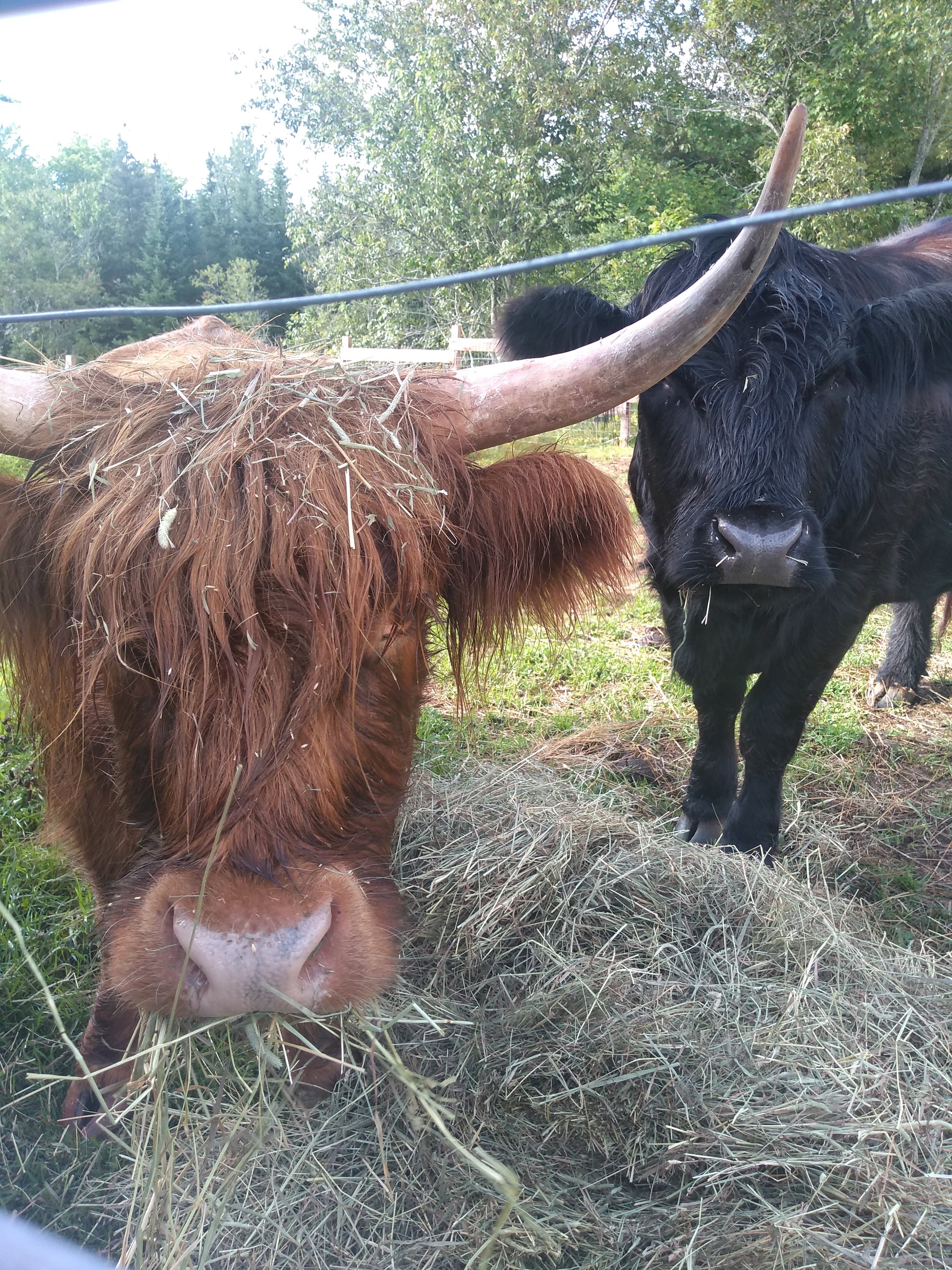
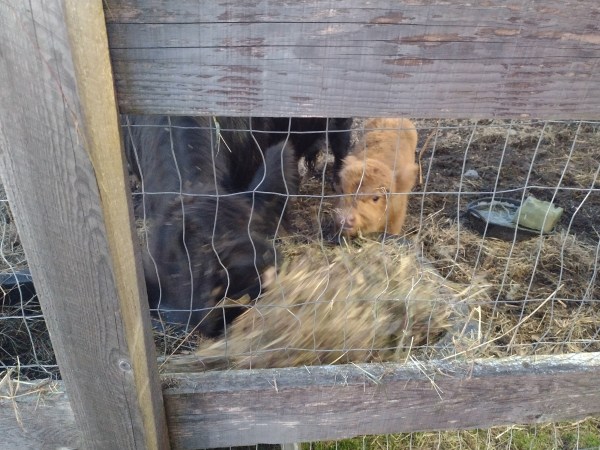
And, not entirely unexpected, either, since our very good boy Henry has been in with the Highland girls for more than a year. But, since Jeff and I have never been around pregnant cows before, we weren’t entirely prepared for the sight that greeted us in September of a just-born calf in the woods with her mother.

We had our suspicions that Rosie (the black Highland/Red Angus mix with no horns) might be in the family way but kind of brushed it off because Henry (white bull) is not only half her age but also half her size, so it seemed a little unlikely that he could’ve gotten the job done. But he certainly proved us wrong!

Bailey, a red Highland heifer, was born without complications or assistance. I went over the feed the cows as usual on a Saturday morning, but when Rosie wasn’t first in line for food, I went looking for her. Low and behold, she’s in the deepest part of the woods and not budging. I get closer, wondering if she’s tangled up in something, and then I see it — a tiny little calf! Rosie was just pushing out the afterbirth, so I knew the calf wasn’t very old.

Of course, I have no idea what to do, but at least Jeff wasn’t at work! So, I book it back to the house to get Jeff in the hope he has more of a clue than I. He thought I was joking when I said there was a calf in the woods and it took some persuasion to get him to come with me but he finally did — it felt like forever to me but it was probably less than a minute.

The part of the pasture where Rosie gave birth is enclosed with barbed wire and electric fence only so we determined that we needed to get Rosie and the calf into a more secure area.

Here’s the trick, though: Rosie is probably our most wild cow. She doesn’t want to be touched, or approached, most of the time. And with her being a new mother, we weren’t sure how that attitude might be affected.

It took her a while, but Rosie decided to leave the calf unattended so she could get some hay and water. Jeff hopped into the pasture with the plan of scooping up the calf and carrying her to the barn paddock a few hundred feet away. Easy-peasy, right? Nope. She had other plans and was quite a feisty baby! Because she was recently born, she was still quite slippery so when Jeff tried to grab her, she slithered away and started blindly running and bleating for her mother. We could feel the ground shaking as Rosie came running straight for Jeff, so he dives through the fence to avoid being trampled. Willow and Henry are hot on her heels to see what this noise and action was all about. Meanwhile, little Bailey has scooted under the fence (exactly why we wanted to move her out of that pasture), with Jeff trying to get her to run toward the barn and paddock instead of into the woods. What does she do? Starts running straight for me on the opposite side of the pasture, and I am standing at the most open part of the fence where, if she got through, she could go anywhere on the property.

I’ve never wrestled a baby animal before, until then. I’m outside the fence; she’s trying to get through because she’s scared. I’m crouched down low, because if she’s coming through the fence she’s coming through the bottom of it. She’s running back and forth along about an 8-foot section of the fence and I’m just shoving her back toward her mother and the rest of the herd, who are now not concerned about the baby at all, but instead are trying to lick my hands (I often hand out treats and pats to them through the fence). Finally, everyone settles down again and moves away from the fence. But, the calf is still in the open pasture.

Jeff and I take a break to change (Jeff caught his pants in the barbed wire and ripped them) and clean up (I had a bunch of scrapes on my arms from the fence), and regroup. I called a farmer in town to seek advice. After the laughter died down (What do you mean, you didn’t know she was going to calf? You have a bull, don’t you? Nope, you really don’t want to leave her in that pasture.), he suggested using our UTV as a distraction for the grown cows and to try to snatch the calf and move her. To be accurate, his best piece of advice was “grab the calf and run like hell!”

We got Aaron to help and he and Jeff cut a hole in the fence far from where all of the cows were so they could get the UTV into the pasture. We intended to put another gate in, but hadn’t gotten to it yet. So they drive up to the calf, who is tired from all the running around, while I bribe everyone else with tasty grain and hay. At first, the calf tries to run again but she’s so tired she stumbles. Jeff and Aaron scooped her up — one on each side — and ran with her to the paddock before the other cows noticed. Then, it was unexpectedly simple to get Rosie in there too and we could finally breath a sign of relief. We had to make a few modifications to the paddock to seal up potential escape routes but at least we knew everyone was safe. We kept Willow and Henry in the open pasture so Rosie and Bailey could bond with each other for the first few weeks.

About a week later, we had a vet come check Bailey out and she received a clean bill of health. Rosie has proven to be a wonderful mother (who would’ve thought?) and young Bailey is growing like a weed. About a month later, we added a new, calf-safe pasture for the winter and until Bailey gets bigger and put the herd back together.

Because she is the first calf born to our farm, we won’t ever forget what it was like, but Rosie and Bailey certainly made it even more memorable.

Transitioning to …

Every day, people ask us: What’s going on in your fields this year?

If you listen to our podcast, you already know the answer, but since we are still building that audience I’ll explain here as well.

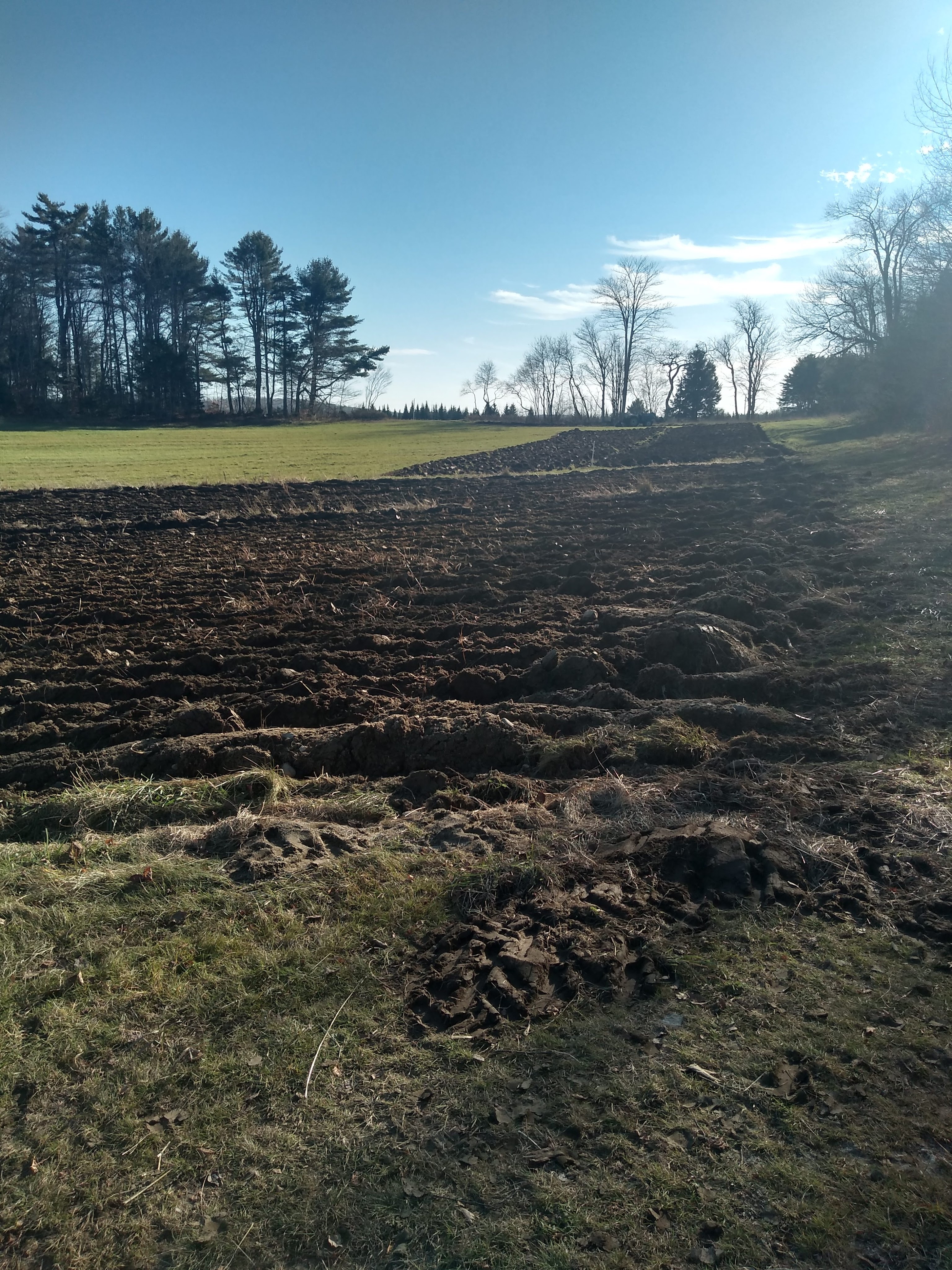
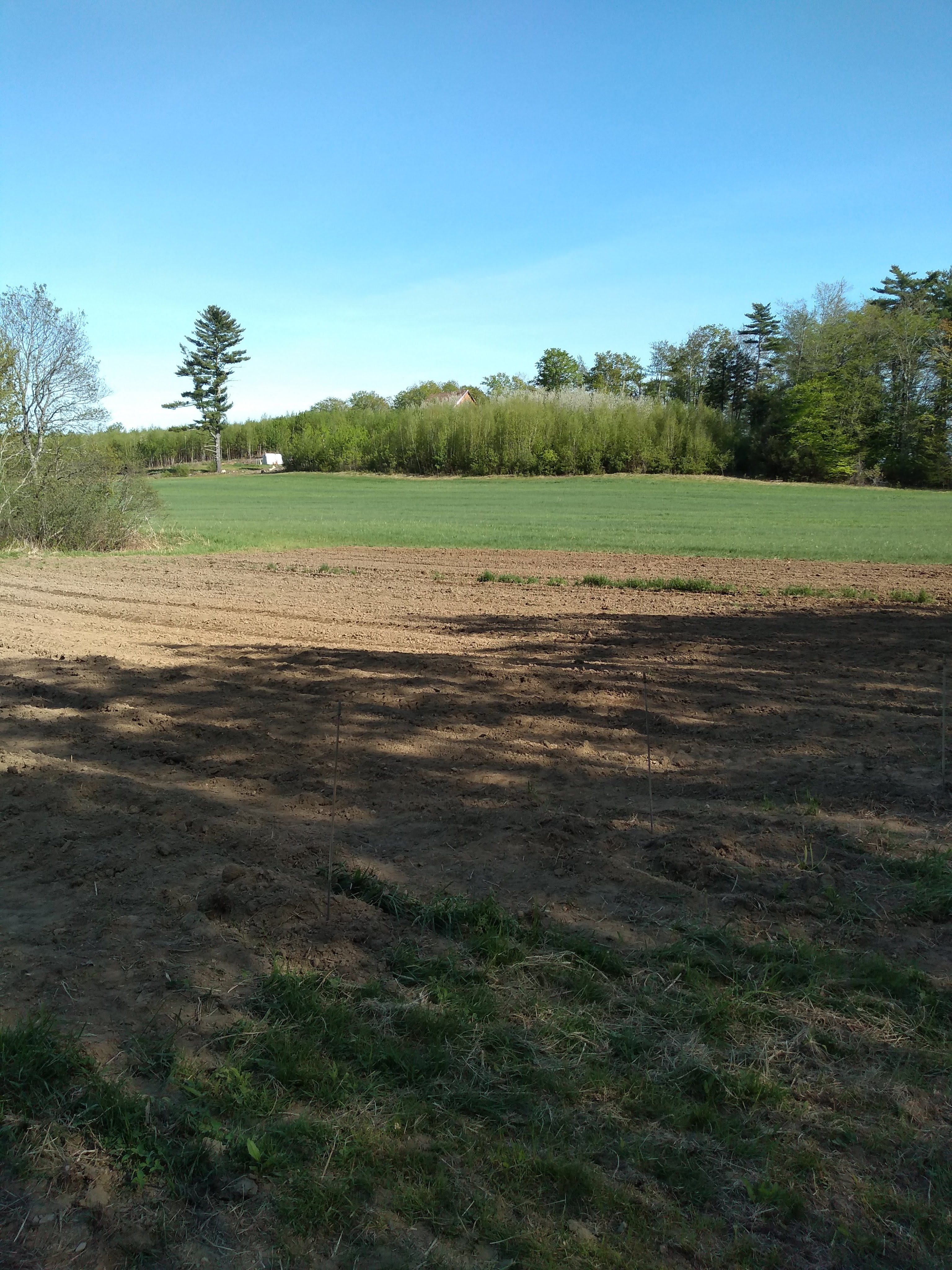
Last fall, in 2022, after the pumpkin season was over, Jeff and I made the decision to part ways with the large farm we have been allowing to farm our land for the past decade and take over management of the farm ourselves. And, boy, did we pick a terrible year to venture into full-time farming. Here in midcoast Maine, it has been unseasonable hot and humid with a LOT of rain. While the rain helps crops grow, it also fuels weeds — hence the current state of our fields (see above).

We spent much of the spring building more pasture for our cows (we have a total of eight right now, but will be going into the winter with fewer after a trip to the butcher). We planted as usual after Memorial Day and then it started to rain. Every single day. For weeks. When it wasn’t raining, temps were in the 80s and everything — including weeds — put on growth fast when the sun was shining.

If we had stayed with the larger farm, our fields no doubt would look different, but that’s part of the reason we decided to take on the responsibility ourselves. We are heading toward a no-till style of farming and are still learning about best practices and methods that work here. We came to that decision too late in the game to start no-till this spring and this season, we can’t possibly keep up weeding by hand or even with the tractors. We hope will have pumpkins to sell in the fall, as we usually do, but it’s still too early to say for sure.

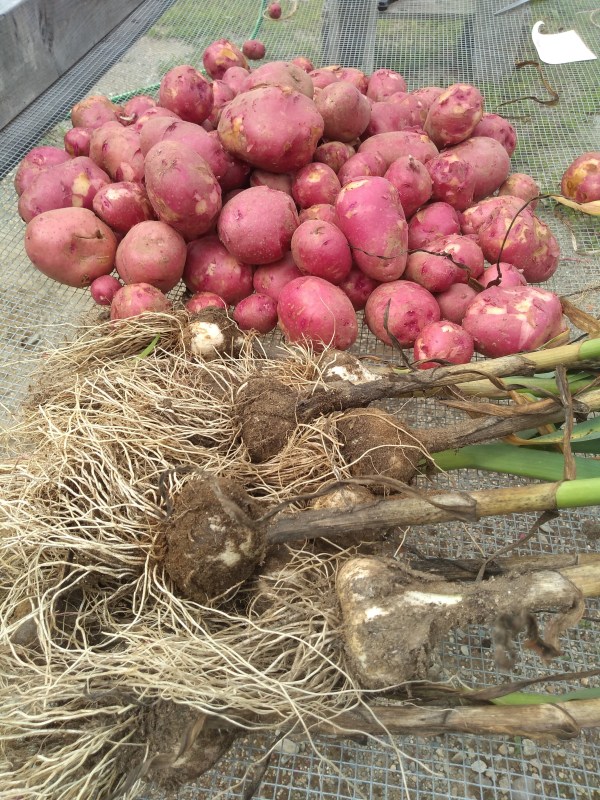
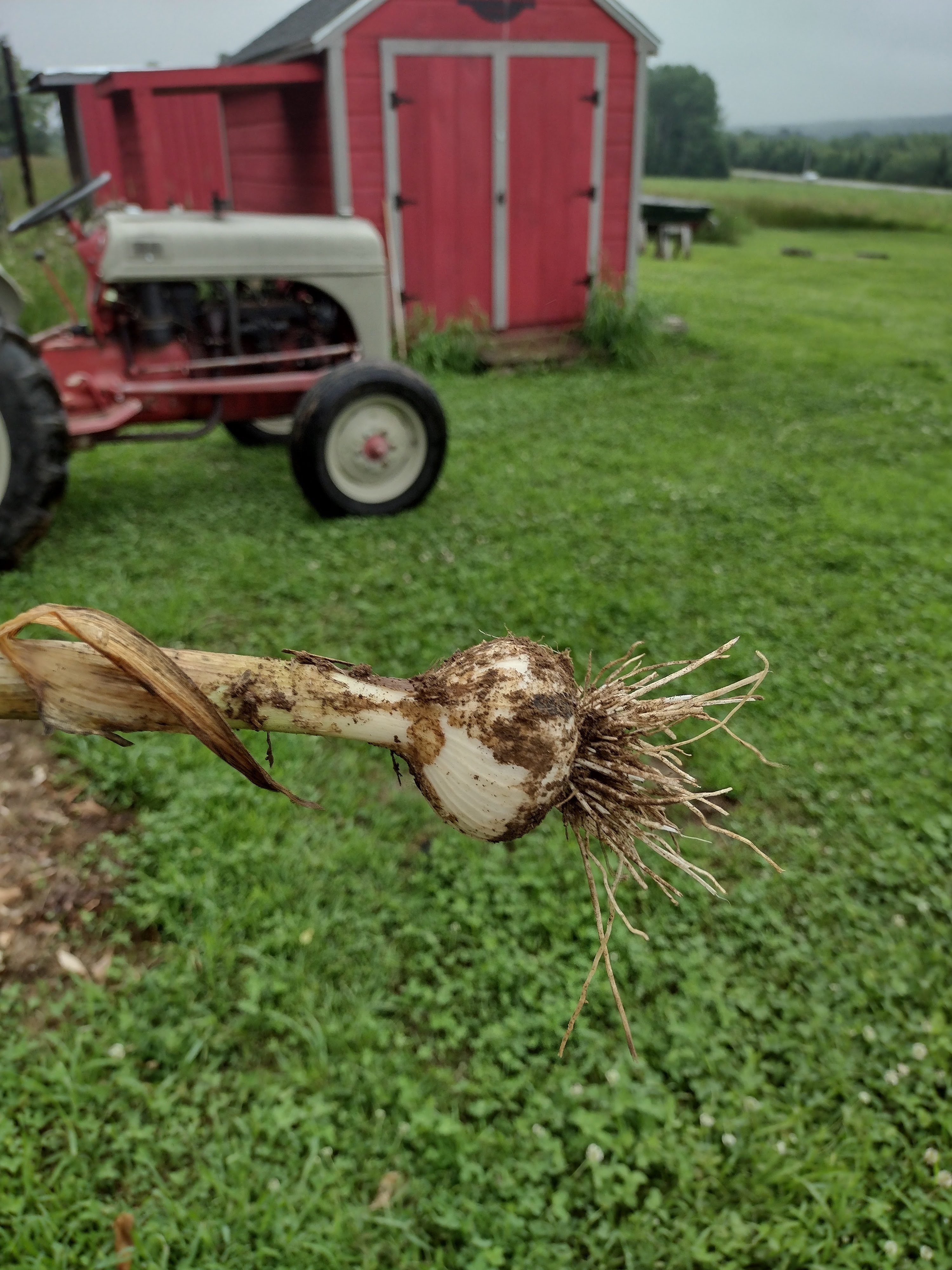
I have some nice looking garlic, though, and I’m working on an online ordering site that will allow people to pick up items on their own schedule without having to man the farm stand.

As well, we have been working on equipment to get everything running in tip-top shape. Unexpectedly, my Dad purchased a couple of tractors with the intention of combining the two into one good tractor — but as it turned out, he make two good tractors instead. He didn’t need two identical tractors and Jeff couldn’t be more excited about the latest addition to the tractor fleet, which Dad delivered last weekend. It still needs a new bucket, so that’s another project for down the road, but Jeff will have that figured out in no time.

We are hoping to start doing our own haying too, but don’t have all of the equipment we need yet. In the meantime, here’s how we are dealing with our standing hay: Jeff cuts it using the rotary cutter on the blue Ford tractor, then we use pitchforks to scoop it in to the back of the pickup or UTV to feed out to the Highlands that have a smaller pasture area than the Belties. It took us a while, but we finally got enough pasture for the grass to get ahead of the Belties — though we are planning on another expansion of the pasture in the next couple of weeks.

So, that’s the short story, haha. We’re trying to podcast more often too and as we do that, I’ll try to update the website as well.

All about that maple

Maple Weekend is just a few days away and we have been getting ready! The sap flow hasn’t been the greatest so far this season but we continue to collect as much as we can and boil it down into delicious syrup.

So when will we be open? Well, Jeff and Steph are attending the annual town meeting on Saturday but oldest daughter Anna and youngest daughter Emily will be manning the saphouse and farm stand in our absence, along with neighbor/nephew Aaron. We expect to open around 8 a.m. on Saturday and will stay open until 4 p.m., unless we sell out. If we still have syrup to sell on Sunday, we will be open from 9 a.m. until we sell out or the weather gets into our bones.

It’s possible you might be able to request a whole frozen chicken or two, or a dozen eggs, if supplies hold up and Steph is around.

As always, we prefer cash, Venmo or PayPal. But, we also accept local checks and credit/debit cards (we pay a fee to accept cards via Square).

If you’re not sure we are still open, look for the open flag by the road (it’s hard to miss), or give us a call or text at 207-542-1449 or 207-542-1836. We are located, for those of you who don’t know already, at 262 Rockland Road, Washington, ME 04574.

Where have we been?

The short answer is: Here on the farm. Just like everyone, we’ve had to make adjustments because of the ongoing pandemic and keeping up with the website has fallen by the wayside as we took on some new projects and animals.

With that, I’d like to introduce Rosie (a Red Angus/HIghland mix) and Willow (a full Highland), who joined Two Rock Ridge Farm in April 2021.

We spent much of the spring — after a strange up-and-down maple sap run — building infrastructure to keep these two ladies safe. We were not expecting to get cows this year, but as luck would have it, things came together and they were delivered by Highland Farms of Troy at the end of April.

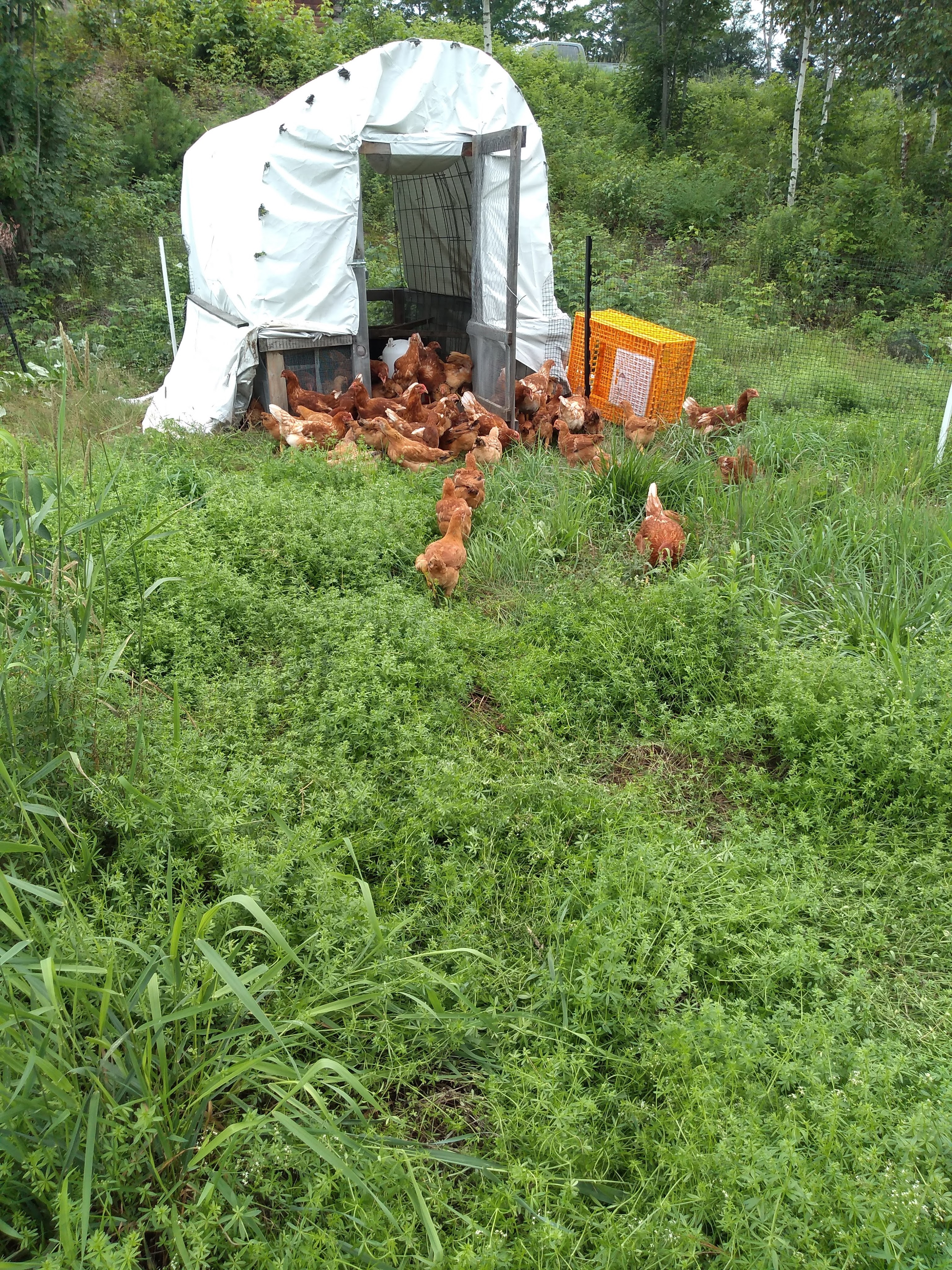
I was able to raise two flights of meat birds this year and tried a new-to-me breed — Red Rangers. Those are a heritage breed of meat birds that aren’t as breasty as Cornish Crosses. Rangers take a little longer to grow out and, in my case, are much smaller birds. I think if they had a little more space (I didn’t get them out onto grass as quickly as I should have), they would have been larger. I kept a few and those have gotten close to typical Cornish Cross size now that they’re in with my layers and aren’t competing with as many birds.

The first batch of birds included some Cornish Cross and we had a time with them. They arrived in April on a day of howling winds and cold. We decided it would be better to keep these small babies in the house instead of the drafty barn. I did all the usual things I do when I get day-old chicks — give them water and a little feed inside the plastic tote I always use as a brooder. Anyone who has ever had chicks knows they can be a little loud so I was suspicious when it got very quiet in the tote. I went to investigate and what I saw was devastating: Thirty wet, cold chicks.

I’m not sure how they managed to soak themselves but many of the birds were stiff and looked dead. Jeff jumped in to help me dry them and try to warm them back up. We put them on the open oven door and Jeff ran next door to grab our niece’s hairdryer. After about an hour, we managed to dry and revive all but three of the chicks. However, in the next week, they continued to die (we think from that initial stressful event) until I was left with just seven Cornish Cross birds. I replenished the numbers with Tractor Supply chicks, Isa browns and Golden Comets, but those chicks did not grow fast enough to be butchered on my scheduled-in-advance date. Most of them now live with the layers.

In addition, we raised pheasants this year for the first time. There was a learning curve there, too. They fly when they are very young — which I did not know. Lost a few of those as well before I realized I needed to cover their brooder. Then, I lost a few more when I moved them into a covered pen outside that I wrapped in chicken wire — a predator reached right through the holes and pulled the smallest birds right through. After that, I added bird netting over the chicken wire and that did the trick. We got permits to release the pheasants and friends with hunting dogs attempted to track them down. Unsuccessfully. But, they said they had fun and we might try again next year, as our release permits are good for two years.

My “old ladies” — free-range chickens I’ve had for five or six years — also had a catastrophic summer. A raccoon attacked and killed four in one night, leaving behind the bloody carcasses and the remaining four traumatized chickens. I found the spot where I thought it got into the coop and patched it with metal chicken wire. But I didn’t find the other spot where it got in and it killed three more of my old ladies. I have just one Barred Rock hen left now and it took her weeks to venture out of the coop again. I added some of the spring chickens to her coop and they are slowing warming up to each other and the young chickens have recently begun laying. I’m not sure how it’s going to play out quite yet but I somehow ended up with a rooster in that batch and he’s been cozying up to my old lady — she might still overrule him but it’s still too early to tell what kind of a rooster he will be.

We decided not to get pigs this year and are glad of it. We will probably go back to raising pigs again next year or the year after, once we move the cows closer to our house. The cows are currently living next door at our niece’s barn, which was being used only for storage and raising meat birds for the past few years. After pumpkin season concludes, we will be back at it, building more fenced pasture for the cows.

Also this spring, we purchased a new farm stand. No more sharing the sap house space for farm stand sales, now we have a dedicated building for retail. It took a couple of days but I managed to get one coat of stain on the farm stand before we opened for the season. We’ve now been open for three weekends and it’s been hectic! (But awesome!)

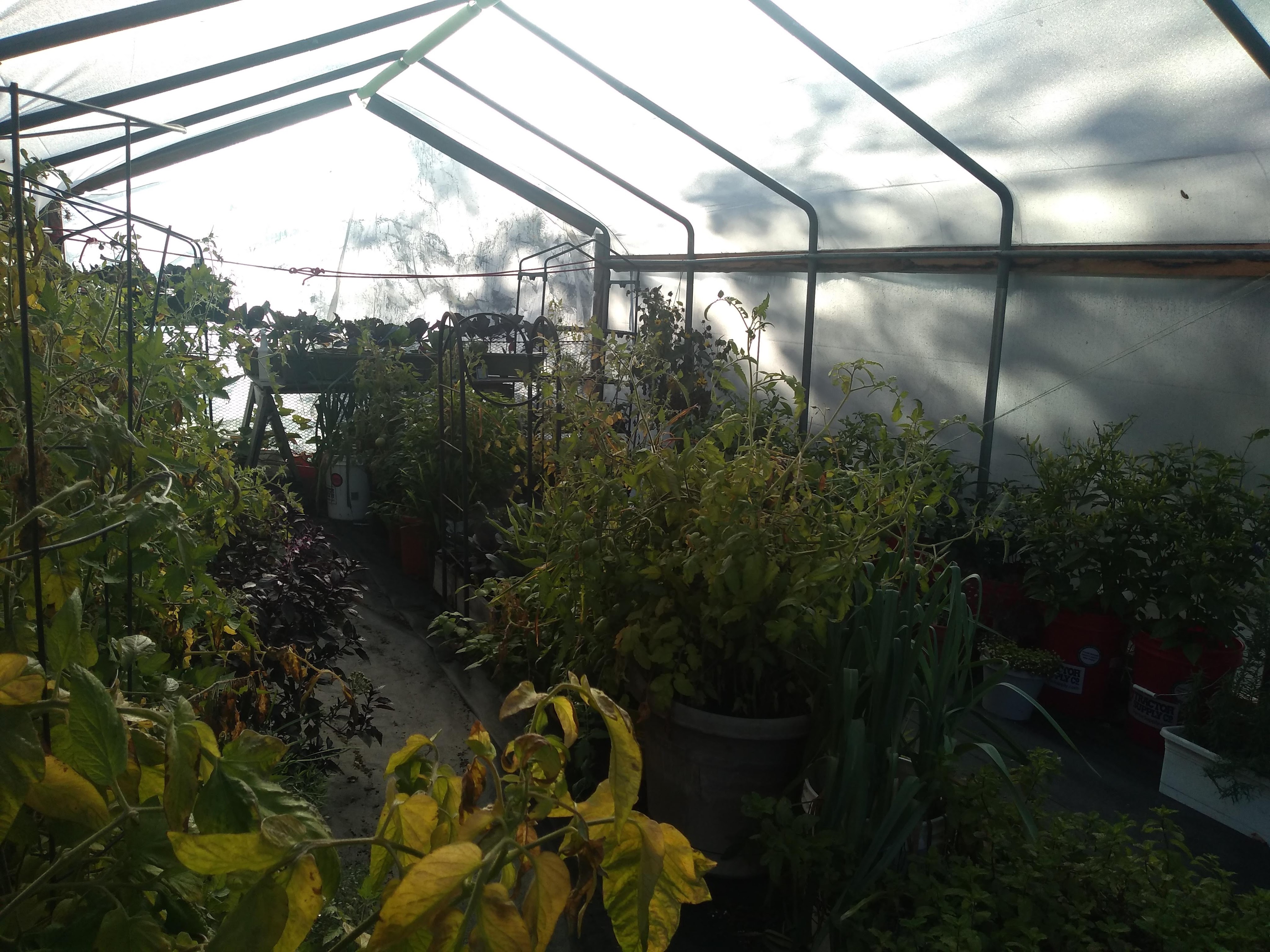
Did I mention we also put up a greenhouse? Just a small one to start, 12-by-20-feet, but everything inside is growing like gangbusters (no small feat considering the weather challenges of this year). If I could figure out how to get the chipmunks to stop chowing down on my unripe tomatoes, I’d be ecstatic. We are already considering a larger greenhouse space for next year.

The farm started a YouTube channel and we’ve posted several videos over the summer of different things around the farm. We continue to post on Instagram and Facebook as well. With winter getting closer, we will be evaluating how to consistently keep up with social media since we obviously didn’t do very well on that front this year.

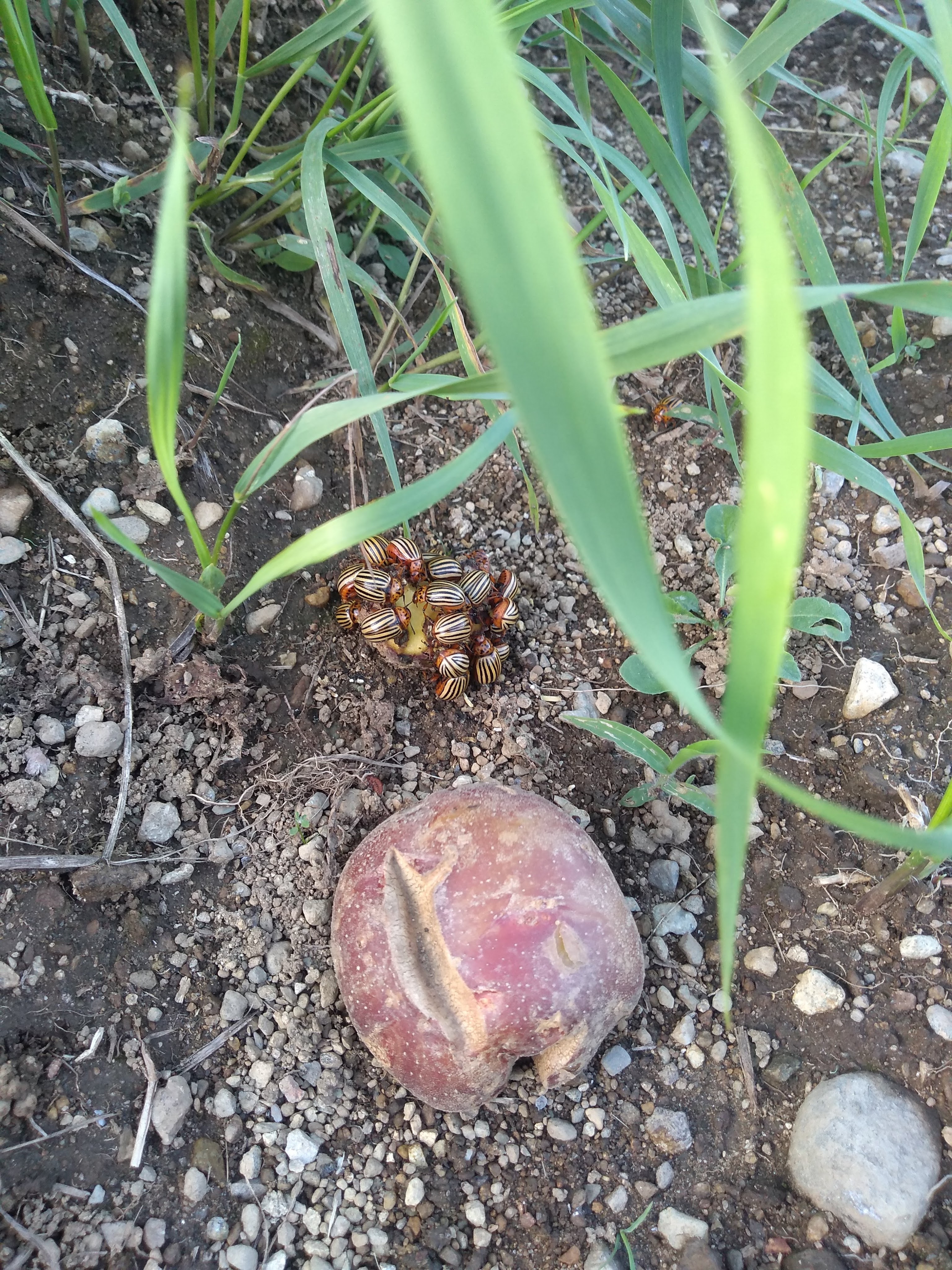
Another thing that did not do well this year for us is potatoes. We planted more than 500 pounds of seed potatoes in May and lost nearly all of them by late July. The plants were growing along as usual, even with the dry beginning of summer. Then it started to rain. And rain. And rain. And rain. Potato beetles discovered our large crop and moved in, decimating rows overnight. We hand-picked bugs. It rained. We dusted with diatomaceous earth. It rained. We simply could not keep ahead of the potato beetles and didn’t want to use harsh chemicals. So we lost all but about 75 pounds of our harvest — most of which were consumed at our niece’s August wedding.

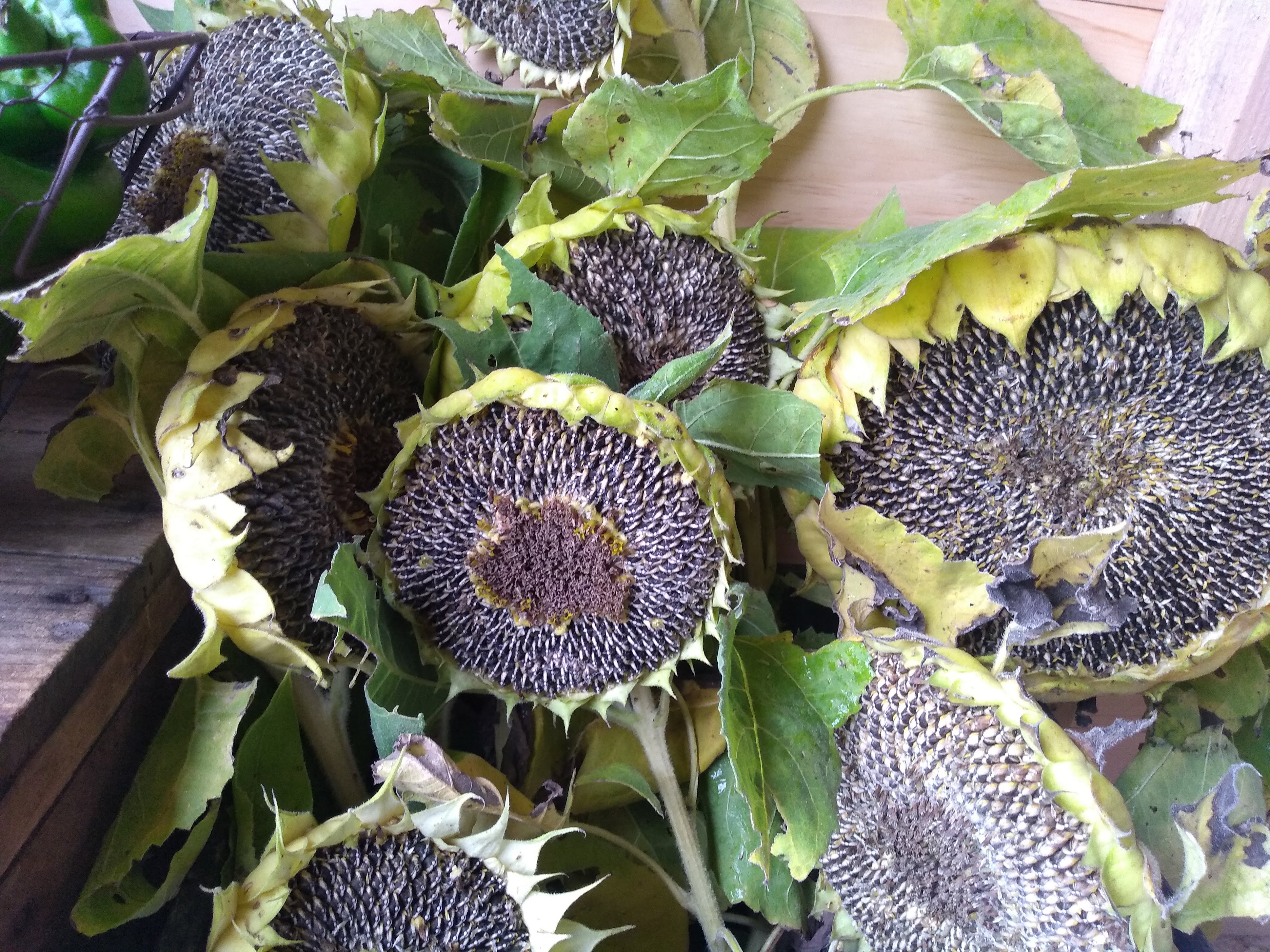
Deer and turkeys also took a toll on the pumpkin crop, wiping out the majority of my small gourds, squash and pie pumpkins that were planted away from our two large fields of carving pumpkins. With those, I also planted a big patch of sunflowers (also for the wedding) and those did quite well. I’ve harvested a bunch of the heads to save the seeds for replanting and I’m going to try roasting some as well. The turkeys are all up in the sunflowers’ business still…but now I know I need to harvest the heads a little sooner.

I’m sure there’s more I’ve forgotten but I think I hit most of the highlights and lowlights of 2021 so far. Stay tuned…

Outside the snow is falling and roosters are crowing, boo-hoo

OK, so, it is not actually snowing right now but it’s a gray winter day here on the farm. The part about the roosters is true though.

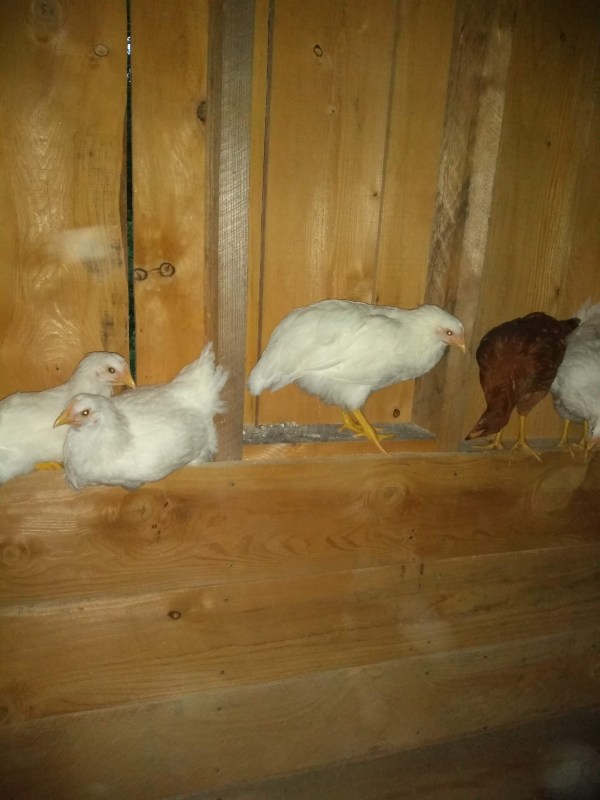
This photo is from a few months ago but you can still see the rooster development starting.

If you recall, earlier this year, I incubated and hatched chickens for the first time. I knew I would end up with roosters but, now, five months later, it seems like there’s a new one every day! Birds I thought would be laying hens all of a sudden are sprouting long tail feathers and towering over the the smaller chickens. Oh well, at least I know they are not all roosters (I purchased some sexed birds as well, not knowing what I would end up with from the hatch).

We still have pigs but finally have begun the butcher-day countdown. This is, by far, the latest in the year we’ve had to care for the bacon and I look forward to not breaking ice and hauling five-gallon buckets of water to them every day.

This week, I also put in our potato order for the spring. Some items already were listed as sold out! I typically don’t order until late January but as crazy as 2020 has been, I think we are going to be looking at shortages of farm supplies, seeds and other things for a while still. I feel extremely lucky to know great people who keep an eye out for things, such as Mason jars and lids, on my behalf. Other than those (and toilet paper!), most things have been available here, even if it takes a little longer to find them.

But winter is when we get to sit for a minute and reflect on what we’ve accomplished during the warmer months. Despite Covid-19, we were able to keep the farmstand open for the whole season. We sold out of potatoes (and barely managed to save any for ourselves!), squash, maple syrup and pumpkins. We have a plan for next year’s crops, turned over new areas of the fields and got the garlic in the ground when it was a balmy 65-degree day in early November. The greenhouse frame is up and leveled where we used to have a fenced-in garden of raised beds we built years ago. Plans are rolling around for new fencing and raised beds around the greenhouse, as well as what crops will be started inside and stay inside for the season. Firewood for most of the winter is split and stacked. I canned all my usual stuff, and froze some garden produce. There are boxes of squash and onions stored away, and garlic. While the freezers are not yet full of meat, the pigs’ days are numbered and we’ve got plenty of chickens.

We made some incredible equipment finds this fall, too. A small garden tractor we plan to use for weed control also came with a snowblower attachment, which Jeff intends to give a whirl once we get more than a couple of inches of snow. In the next town over, we picked up a big scale that will be great for larger amounts of potatoes and a little more professional than our bathroom scale for pumpkins.

I’m learning more about QuickBooks every day but am also planning to get back to writing a little more often during these slower months.

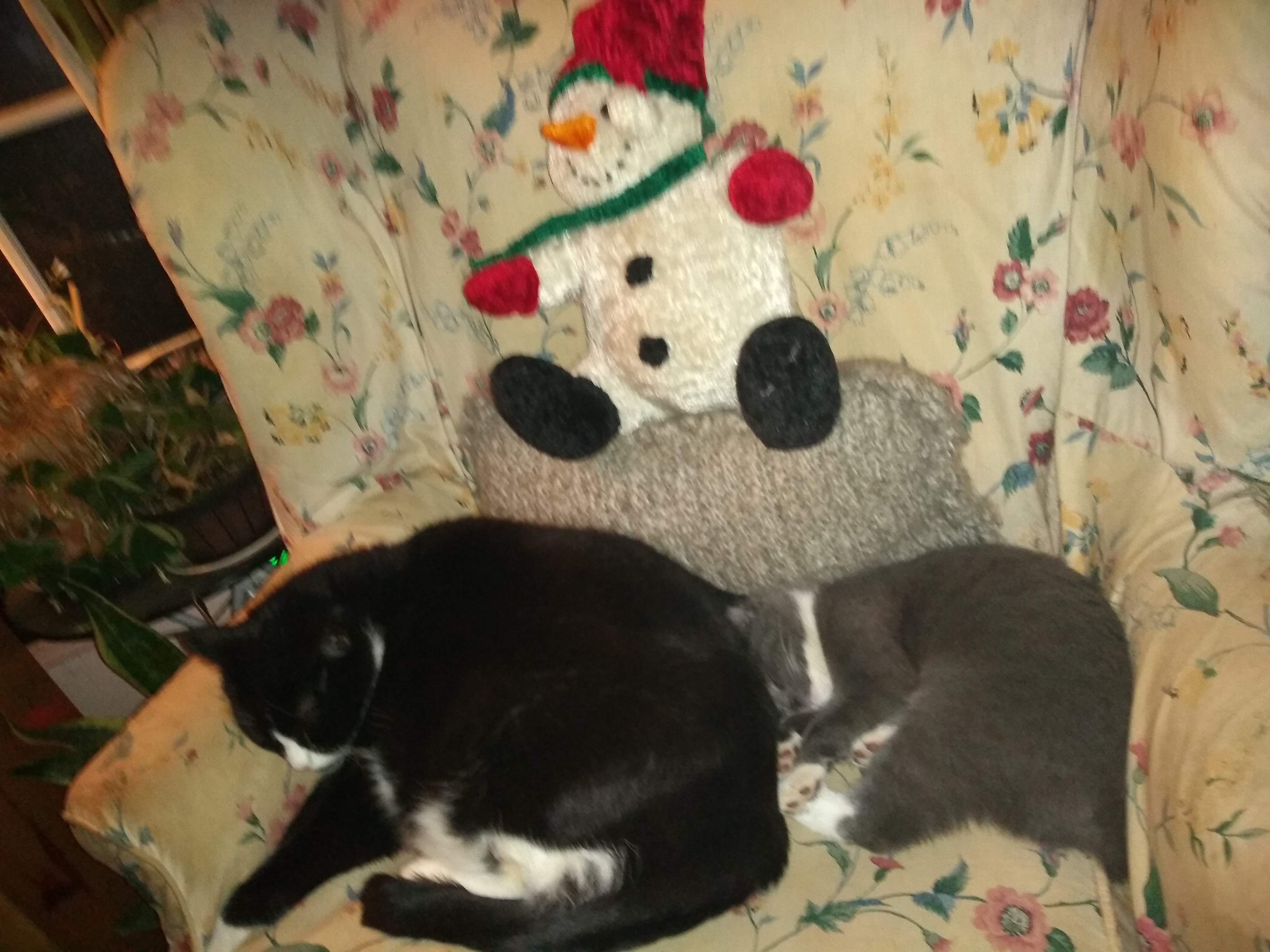
Did I mention we also got a new kitten? This is Gracie, shown here with Penelope for scale, and she’s very much a kitten — always annoying the other two cats and running (unless she’s asleep).

Chicken math

If you don’t follow two_rock_ridge on Instagram, you probably aren’t keeping up with the number of chickens currently on the farm. It’s 37, not counting the ones already in the freezer(25) or the next soon-to-arrive batch of Cornish Crosses (30).

Here’s what happened. This spring, I had just nine laying hens. I’ve been wanting to add more laying hens in the hope of selling some eggs in the farmstand, so I reached out to a friend who has some beautiful birds and an incubator to see if she might hatch “a few” chicks for me. Long story short, she ended up with a ton of orders for chicks and by the time she got to my name on the list, she offered use of her incubators to me.

I’ve never hatched a bird in my life. Didn’t really know much about how it works. But, I gave it a shot and loaded up the eggs — 21 days later, I had a successful hatch of 18 brand new baby chicks. More about that process later…

In the meantime, knowing it would be a while before the babies would hatch, in May I also picked up 10 more laying birds from Pleasant Pond Poultry in Turner, just in case the hatching didn’t work out.

We finished construction (mostly) on the new henhouse and when I moved the 10 now-“teenagers” out there, we determined the space won’t be large enough to add the 18 “babies” that hatched in July. So, we are working on another henhouse, which will eventually connect with the first new henhouse with chicken runs for travelling back and forth. These are both in addition to the existing coop for the “old ladies” and the movable chicken tractor that I use for meat birds.

I’ve also been trying to figure out how to raise more meat birds at once, as my chicken tractor maxes out at 30 birds…

To summarize, in the span of three months, we went from one coop and one chicken tractor for nine birds to four coops/houses/tractors and three dozen chickens (plus, a total of 55 meat birds this year alone) — this is chicken math in all its glory. Don’t say I didn’t warn you.

Open for business, corona-style

This weekend, we intend to open the farm stand for the season — but things will look a little different than last year because of COVID-19.

The biggest change is that we will NOT be allowing self-service. The stand will be manned (read: open) as often as we are able and we plan to have pre-weighed bags of potatoes ready to go in different weights (and we will weigh up as much as you want if those sizes are too small!). We’ve set up a table outside the stand to allow for social distancing and won’t be allowing anyone inside the stand.

If the open flag is flying by the road, pull in and come see us!

We know it’s summer and it’s hot, but masks are encouraged. We will have you back in your own vehicle — where you can remove your mask — as quickly as we can.

We have new payment methods available as well — Venmo (@Stephanie-Grinnell) and PayPal (tworockridgefarm@gmail.com). We will continue to accept checks and cash but are unable, at this time, to accept credit/debit cards.

Whenever possible, please pre-order meat (whole frozen chickens and cuts of pork available) by emailing tworockridgefarm@gmail.com or calling/texting 207-542-1449. You’ll receive a response within 24 hours, often faster, with any method you chose to contact us.

Stay updated on what’s available here.

Quick update on spring happenings

While the list of things that still need to be done seems to grow longer every day, we’ve made good progress this spring.

Potatoes planted, check.


Pigs and chickens purchased and growing, check.

Fields cultivated for weeds, check.

img_20200526_163607408

New henhouse construction started, check.

img_20200602_150326530

And the list goes on! Raised beds cleaned and ready for planting, check. Barn emptied of animals and cleaned, check. House relatively presentable in regard to cleanliness, check. Laundry mountain shrinking, check. Return to regular employment, check. Licensing paperwork submitted and approved, check. Insurance policy updated, check.

As well, I’m doing a better job with paperwork and tracking crop production and expenses this year. And (!) we also are working on a few house projects that we’ve put off for years.

I’m getting better at operating tractors, and Jeff even had me on “Big Blue” while we cleaned out the barn to save him from getting on and off the tractor repeatedly. My legs are too short for running this tractor for any period of time, I found. I had to sit way forward on the seat to get the clutch in all the way. But knowing how to use the bucket controls is helpful.

img_20200602_164613883

Jeff is working on another old John Deere over in the shop that belonged to his uncle in our precious little down time. Here are the “before” pictures — I hope to have “after” pictures in a few months.


There you have it, what we’ve been up to for the past month or so.

Pandemic panic purchases = stressful spring

What a time we have had trying to find feeder pigs (pigs raised for meat) this year! And then, to get a butcher date has been even more challenging. If you’ve read my prior blog, you already know some of the story, so feel free to skip over the next paragraph, which is a summary.

First, we arranged last fall for another local farmer to breed pigs for us. She uses artificial insemination and despite several tries, none of her pigs were bred. She let us know sometime in February she would not be able to provide us with piglets this year. We immediately started looking for a new source and finally got in touch with a man about an hour away, who said he had a few available but he wasn’t sure if they would survive. By mid-April (scheduled pick-up date in early May), he let me know they didn’t. Next, we tried another local farm.

Here’s where some new information comes in: I arranged for purchase of six pigs from this person, with whom we have dealt before. Over the winter, I’d been researching the particulars of licensing to sell meat and finally decided it was time to get my paperwork submitted. We made a social media announcement to let people know we aim to sell meat once the licensing comes through; this person saw the post and immediately cancelled my order. Turns out, this person feels the market in this area is too tight for anyone else to sell pork — that was the reason given for the cancelled order, which included a full deposit refund. This happened May 4.

We spent much of the day May 5 scouring the internet and making phone calls, hoping to find piglets available sooner than fall.

I begged the local farmer for reconsideration and it was agreed we could have just two piglets. A week later, after thinking about the situation, I reached out and cancelled that order. Most of my two-pig deposit was refunded, and the local farmer fairly retained an administrative fee for the waffling.

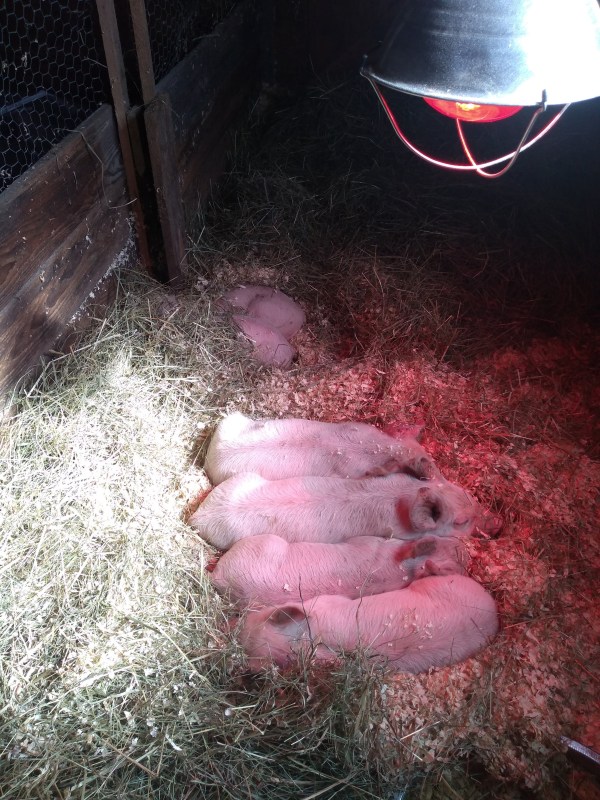
At the same time, to hedge our bets a bit, we reserved six with one person and six through a farm in New Hampshire (three hours, one way). We got a call May 8 from the closer source that said our pigs had arrived and we should pick them up the next day. On May 9, an extremely windy and snowy day, we drove an hour and a half to pick up six of the smallest pigs I’ve seen in a while. We made the decision to temporarily house them in our niece’s barn because it was so cold. They settled in with shavings and bales of hay, as well as the heat lamp I usually use for my meat chickens.

img_20200509_131939544

A week later, we were supposed to pick up pigs in New Hampshire. The owner contacted us and asked if we would be willing to hold off a week so she could have them vet-checked and cleared. Of course!

In the meantime, one of our six barn piglets died. It had not been healthy since we brought it home; it was very skinny and not eating well, along with diarrhea. We treated with wormer and lots of fresh, clean water in the hopes “skinny pig” would make a recovery. It didn’t. However, the other five remained healthy and happy — we moved them to their permanent outside pen a few days ago.

SOME people (cough, Jeff, cough) can’t name the piglets for fear of becoming too attached. But I can! This year’s singer-inspired batch of piglets are Jon Boar Jovi, Pork Malone, Hammy Davis Jr., Swine-el Richie and Melissa Etherpig. Enjoy this video of them just after being moved outside 🙂

But, then, more problems. As we prepared to pick up our other six piglets, we were hearing buzz about unhealthy “factory pigs” coming out of Pennsylvania. I reached out to the New Hampshire farmer with my concerns about bringing in potentially unhealthy piglets to mix in with our now healthy batch. To the farmer’s credit, our deposit money was refunded based on our concerns and all parties walked away agreeing to stay in touch for future piglets.

Pigs finally in hand … er, barn … we called our regular butcher to reserve a date for their demise. Booked almost solid. We managed to get them in this year, barely. It’ll be the latest into the year we’ve raised pigs and we’re expecting them to be monsters — a welcome change from our underwhelming sized pigs from last year.

All that said, we have been trying to figure out why it was so difficult to even locate pigs for sale this year. After calling the butcher, we are assuming people in larger numbers have decided to turn to raising a pig for meat — there have been news headlines warning of meat shortages because of COVID-19, so perhaps that is the driving factor.

I thought it would be difficult to get my meat birds into the butcher as well, but as it turns out, I had my pick of dates. Go figure! We started raising pigs and chickens at the same time, and it seems crazy to me that people might choose to raise a pig over a flock of meat birds. Pigs are a larger return but meat birds are a fast turn-around.

img_20200530_180648_557

The birds above will only be around for about nine weeks total (some of those weeks are already gone!) before they head off to the big chicken pasture in the sky.

In the same vein of COVID-19 difficulties, it also seems more people are raising chickens of all kinds. Three stores I tried the same day did not have chick grit, which I’ve never had trouble finding before. Our local feed store now is regularly wiped out of feed, which also has never happened before.

Well, I think I’ve talked your ears off enough for now. Stay tuned for an update on all of the other goings on here at Two Rock Ridge Farm (there are a lot)!

Blog at WordPress.com.

Up ↑